
Home

Modern. Clean. Fast. Beautiful. Engaging.

Create a modern, clean, and engaging homepage that welcomes visitors and makes navigation simple and enjoyable.

About us

We believe a great homepage should be simple, beautiful, and easy to use. Our goal is to create a clean and modern design that helps visitors quickly find what they need while enjoying a smooth browsing experience.

With a focus on creativity, simplicity, and user-friendly layouts, we design websites that look professional and feel welcoming. Every detail is carefully planned to make your online presence stand out.

Our mission is simple: create beautiful designs that connect, inspire, and deliver a better experience for every visitor.

Recent Post

Finding the Best Cable Management Box for a Clutter-Free Space
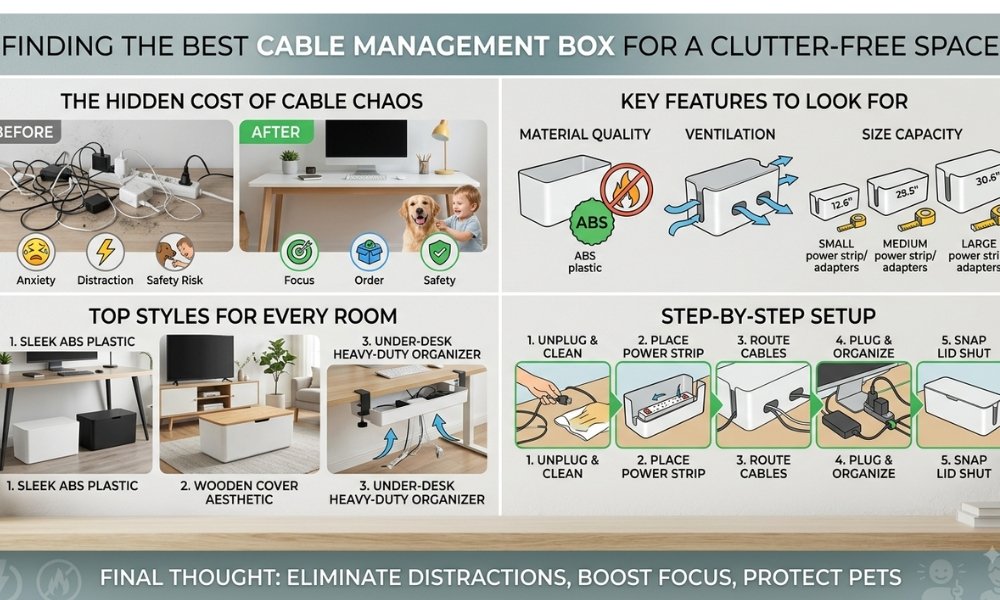
Finding the Best Cable Management Box for a Clutter-Free Space We live in an age of constant connectivity. Between gaming rigs, multi-monitor desk setups, high-speed Wi-Fi routers, home theater speakers, and charging stations, our spaces are packed with electronics. However, with modern convenience comes an unavoidable byproduct: a chaotic web of tangled cords trailing across floors and behind furniture. Untangling that rat’s nest doesn't just improve aesthetics—it transforms how you feel in your living or working environment. A quality cable box conceals power strips, surge protectors, and bulky power bricks in one streamlined, dust-free container. The Hidden Cost of Cable Chaos A cluttered desk or entertainment center does more than look unkempt; it actively creates friction in your daily routine. Visual Stress and Workspace Productivity Psychological research shows that visual clutter increases cognitive load and anxiety. When your eyes constantly catch a chaotic bundle of wires behind your monitor or television, your brain registers it as unfinished business. Clearing that distraction creates a sense of order that boosts focus and productivity. Safety Hazards for Pets and Children Exposed power strips resting on the floor pose genuine safety risks. Curious puppies and kittens are notorious for chewing on live cords, while toddlers might pull on dangling cables or poke around active electrical sockets. Encasing your power strip inside a secure box removes those electrical hazards from plain sight. Key Features to Look For Choosing the best cable management box for your specific home setup requires looking past basic appearances. Different environments demand different functional specifications. Material and Build Quality Look for high-density ABS plastic or flame-retardant materials. Because power strips generate internal warmth, high-grade heat-resistant plastics ensure your enclosure remains safe and structurally sound over years of daily use. Ventilation and Heat Dissipation Electronics generate heat. A well-designed box must feature multiple cutout slots, ventilation grills, or floor vents. These openings allow passive airflow so your power adapters and surge protectors don't overheat inside the closed chamber. Size and Surge Protector Capacity Before purchasing, measure your power strip along with the bulky power adapters plugged into it. Small Boxes (~10 to 12 inches): Perfect for small phone charging stations or nightstands. Medium Boxes (~12 to 14 inches): Ideal for standard 6-outlet power strips. Large Boxes (15+ inches): Necessary for heavy-duty surge protectors, wider gaming power blocks, and thick AV cables. Top Styles of Cable Boxes for Every Room Cable containers are no longer boring plastic tubs. Manufacturers now produce designs that seamlessly match modern home décor. Sleek ABS Plastic Enclosures Minimalist monochrome designs—usually in matte white or dark gray—blend effortlessly into contemporary office desks or living room TV stands. They are durable, easy to wipe clean, and budget-friendly. Wooden Cover Aesthetic Boxes If your home features warm wood tones, rustic furniture, or Scandinavian design elements, choose a box equipped with a natural bamboo or real wood lid. These act as decorative accents while completely hiding electrical connections underneath. Under-Desk Heavy-Duty Organizers For minimalists who prefer keeping the floor entirely clear, under-desk tray style boxes screw or clamp directly to the underside of your tabletop. They lift all power bricks and surplus wire off the ground, making vacuuming underneath your desk completely effortless. Step-by-Step Setup: Tidy Your Cords in Minutes Transforming a messy bundle into a clean setup takes less than fifteen minutes when you follow a structured approach: Unplug Everything: Start with a completely blank canvas by powering down and unplugging all devices. Clean the Area: Wipe away dust that has accumulated behind your desk or TV stand. Place the Power Strip Inside: Set your main surge protector flat inside the base of the cable box. Route Main Cables Through Slots: Thread the main power cord out of one side slot toward your wall outlet. Plug Devices in Sequentially: Feed each device cord through the side openings, plug it into the strip, and wrap excess wire length inside the box using hook-and-loop cable ties. Snap the Lid Shut: Secure the cover to lock everything out of sight. Common Mistakes to Avoid When Hiding Wires Bending Cables Too Tightly: Avoid folding or sharply bending power cords to force them inside a small box. Sharp bends damage internal copper wiring over time. Forgetting Airflow Needs: Never block the side cutouts completely. Always leave room for heat to vent freely. Overcrowding the Interior: If you have to force or press the lid down hard to close it, your box is too small for the number of adapters inside. Upgrade to a larger size to prevent fire hazards. Final Thought Tackling cable clutter is one of the most satisfying home improvement projects you can complete in an afternoon. By selecting a durable, well-ventilated enclosure that fits your space, you eliminate visual distractions, protect your pets, and prolong the lifespan of your electronics. A clean space naturally fosters a calm, focused mind. For a visual breakdown of popular desk and home office setup options, check out this video on Top 5 Cable Organizer Boxes for a Clean & Minimalist Desk. This clip clearly demonstrates how different box sizes and designs look in real-world desk environments.
Ahad··0 comments

We live in an age of constant connectivity. Between gaming rigs, multi-monitor desk setups, high-speed Wi-Fi routers, home theater speakers, and charging stations, our spaces are packed with electronics. However, with modern convenience comes an unavoidable byproduct: a chaotic web of tangled cords trailing across floors and behind furniture. Untangling that rat’s nest doesn’t just…

Continue Reading

Micro-Habit Ideas That Will Transform Your Career in 30 Days
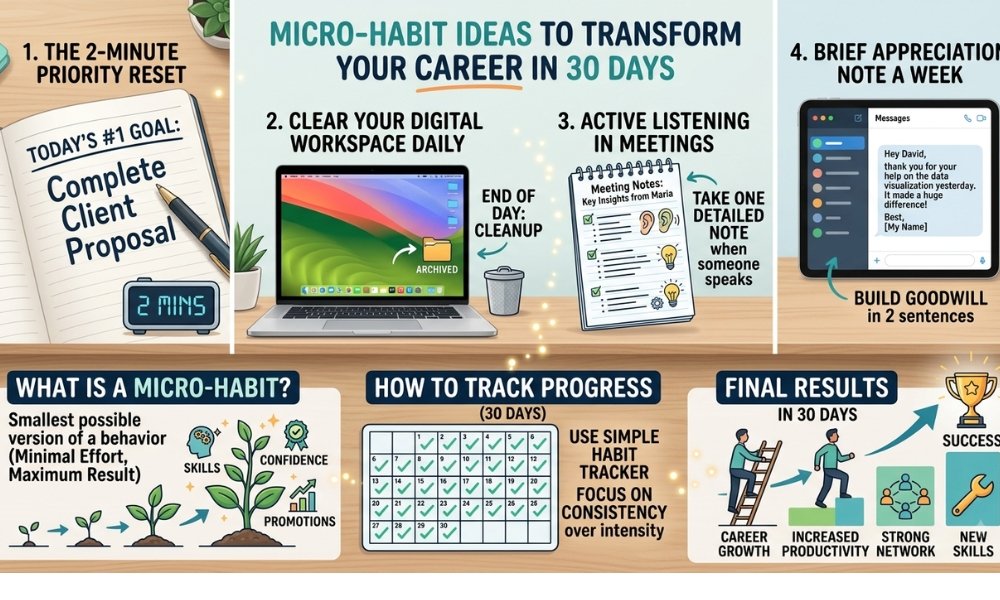
In the fast-paced modern workplace, we often think that career advancement requires massive leaps: landing a major promotion, completing a two-year degree, or completely overhauling our daily schedules. However, true long-term professional growth rarely happens overnight. More often, it is the result of small, consistent actions repeated daily.
Ahad··0 comments

In the fast-paced modern workplace, we often think that career advancement requires massive leaps: landing a major promotion, completing a two-year degree, or completely overhauling our daily schedules. However, true long-term professional growth rarely happens overnight. More often, it is the result of small, consistent actions repeated daily. If you want to upgrade your professional…

Continue Reading

Why Most People Fail at Building New Habits (and How to Fix It)
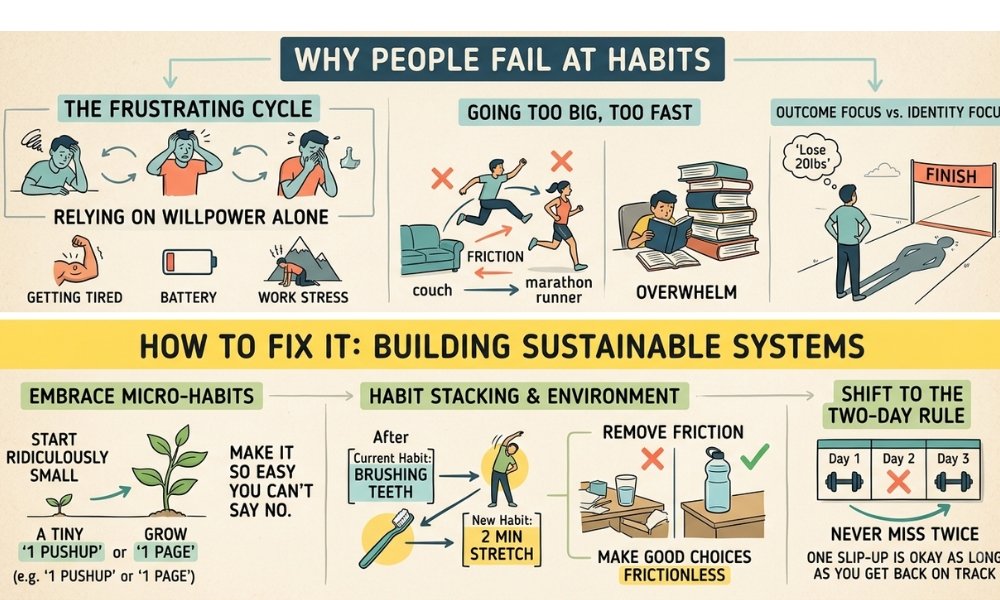
Why Most People Fail at Building New Habits (and How to Fix It) Every year, millions of people set ambitious goals. We buy shiny new gym clothes, stock our fridges with organic greens, download language apps, or purchase planners with grand visions of total life transformations. Yet, within a few weeks, most of those new routines vanish without a trace. If you have ever felt defeated after watching a good intention fizzle out, you are not alone. Understanding why most people fail at building new habits (and how to fix it) requires taking a closer look at human psychology, behavioral triggers, and practical system design. The Frustrating Cycle of Motivation and Abandonment The desire for self-improvement usually starts with a sudden burst of inspiration. You watch a motivational video, read a book, or decide that a new month marks a clean slate. Powered by high energy, you tackle your new routine head-on for three or four days. Then Monday hits. Work gets busy, stress creeps in, or exhaustion sets in. Suddenly, forcing yourself through a complex new routine feels impossible. Motivation drops back to its baseline level, and without a solid framework underneath, the habit collapses. Mistake 1: Relying Entirely on Willpower and Motivation The biggest flaw in standard goal-setting is treating motivation as a permanent resource. In reality, motivation is an emotion—and like all emotions, it fluctuates constantly based on sleep, stress, hunger, and environment. Why Willpower Fails Under Stress Willpower acts like a muscle that fatigues over the course of the day. Every decision you make—from choosing what to wear to answering work emails—depletes a portion of your cognitive energy. By evening, when it is time to work on your new habit, your self-control reserves are depleted. Relying on willpower alone guarantees inconsistency. Mistake 2: Going Too Big, Too Fast When people decide to change, they often try to change everything at once. A person who hasn't exercised in two years decides to train for 90 minutes a day, six days a week. Someone who reads zero books pledges to read 50 pages every night. The Problem with Friction Radical changes create immense friction. When a task requires significant effort, your brain perceives it as a threat or a chore. The larger the initial gap between your current lifestyle and the new behavior, the harder your brain will fight to return to its comfortable, familiar baseline. Mistake 3: Focusing on Outcomes Instead of Identity Most people build outcome-based goals: "I want to lose 20 pounds," or "I want to write a book." While having a clear goal is helpful, focusing exclusively on the final result creates a psychological mismatch. Changing Who You Are First If you view yourself as a sedentary person who is forced to run, every jog feels like a punishment. True behavioral change occurs at the identity level. Instead of focusing on running a marathon, focus on becoming the type of person who never misses a workout. When your actions align with your core identity, consistency becomes automatic. Mistake 4: Lacking a Specific Execution Plan Vague intentions yield vague results. Stating "I'm going to eat healthier" or "I'm going to practice Spanish more often" leaves too many variables open. When decision time arrives, your mind defaults to the easiest option available—which is usually your old habit. Fix 1: Embrace the Power of Micro-Habits To break through initial resistance, make the new behavior so ridiculously small that you cannot say no. This strategy renders willpower unnecessary. Instead of reading 30 pages a night, commit to reading one page. Instead of doing 50 pushups, commit to two pushups. Instead of meditating for 20 minutes, sit quietly for 60 seconds. Once you establish the baseline habit of showing up every day, scaling up the effort becomes natural and easy. Fix 2: Optimize Environment and Use Habit Stacking Your environment shapes your behavior far more than internal desire. If you want to build better routines, adjust your physical surroundings to lower friction for good choices and raise friction for bad ones. Subheading A: Linking New Habits to Existing Routines Habit stacking leverages established neural pathways. Instead of picking an arbitrary time for a new habit, attach it to a habit you already do automatically every day: "After I pour my morning coffee, I will write down three priorities for the day." "After I brush my teeth at night, I will do two minutes of stretching." Subheading B: Removing Friction Points Make good choices frictionless. If you want to exercise in the morning, lay out your workout gear the night before. If you want to drink more water, keep a filled bottle directly on your desk. Fix 3: Shift Focus to the "Two-Day Rule" Perfectionism is a silent habit killer. Many people fall victim to the "all-or-nothing" mentality: if they miss a single workout or break a dietary streak, they feel like a failure and abandon the effort altogether. To counter this mindset, implement the Two-Day Rule: never miss your habit two days in a row. Missing one day is an accident; missing two days is the start of a new, negative habit. Rebounding quickly preserves your momentum and builds resilience. Final Thoughts Building sustainable routines isn't about raw discipline, grueling effort, or sudden transformations. Success comes from designing smart systems that work alongside human psychology rather than fighting against it. By starting small, optimizing your environment, and focusing on incremental consistency over perfection, you can permanently master the art of positive change.
Ahad··0 comments

Every year, millions of people set ambitious goals. We buy shiny new gym clothes, stock our fridges with organic greens, download language apps, or purchase planners with grand visions of total life transformations. Yet, within a few weeks, most of those new routines vanish without a trace. If you have ever felt defeated after watching…

Continue Reading

Simple Home Setup Ideas to Boost Your Daily Focus and Energy
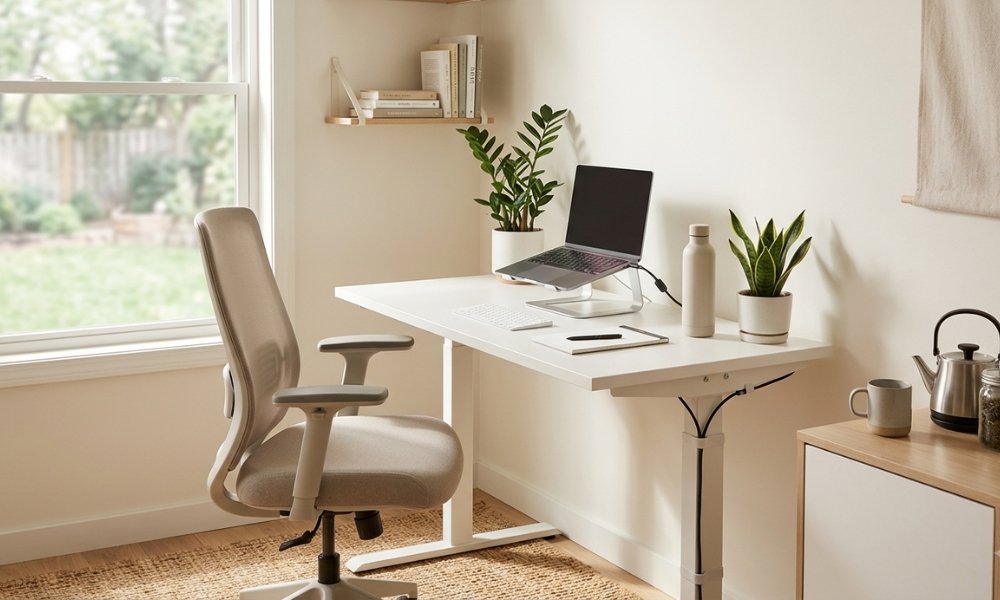
Simple Home Setup Ideas to Boost Your Daily Focus and Energy Our surroundings play an immense role in how we think, feel, and perform each day. When your living space feels cluttered or poorly arranged, your brain constantly processes background distractions, draining your cognitive reserves before you even finish your morning routine. On the flip side, intentional organization creates an environment that naturally fosters mental clarity and vitality. By implementing a few simple home setup ideas to boost your daily focus and energy, you can transform your space into a personalized engine for productivity and well-being. Why Your Living Space Controls Your Mental Energy Your brain relies heavily on visual cues to determine whether it should be alert, relaxed, or stressed. Cluttered surfaces, dim lighting, and uncomfortable seating signal chaos to your nervous system, leading to fatigue and procrastination. When you deliberately organize your home environment, you reduce unnecessary decision fatigue. A well-designed room acts as a passive nudge, helping you dive into deep work effortlessly while preserving energy throughout the afternoon. Designing a Dedicated Workspace That Signals Focus Blending your relaxation areas with your work zones creates psychological confusion. If you answer emails from bed or analyze spreadsheets on the couch, your brain struggles to associate any single location with high performance. Eliminating Dual-Purpose Confusion Establish a clearly defined boundary for work, even if you live in a compact apartment: Set Up a Fixed Work Zone: Reserve one specific desk, table corner, or nook exclusively for tasks requiring concentration. Pack Away Work Items: At the end of the workday, pack your laptop, notebooks, and cables out of sight so your brain recognizes it is time to unwind. Optimizing Natural and Artificial Lighting Lighting is one of the most powerful regulators of human energy levels and mood. Poor lighting causes eye strain and triggers early sleepiness, while proper illumination keeps you sharp and attentive. The Power of Circadian Lighting Aligning your indoor lights with natural daylight patterns supports your internal body clock: Position Near Windows: Place your desk perpendicular to a window to maximize daytime natural light without creating harsh screen glare. Use Cool White Light for Focus: During work hours, use bright, cool-toned LED bulbs (around 4000K to 5000K) to promote alertness. Switch to Warm Lighting in the Evening: Transition to warm, dim lamps after dusk to signal to your body that it is time to rest. Eradicating Visual Clutter to Calm Your Mind Visual clutter competes for your cognitive attention. Every stray paper, random mug, or unorganized stack of mail represents a tiny task your brain feels compelled to resolve. Keep your primary vision field minimal: Apply the Clear Surface Rule: Keep only your daily essentials—like a notebook, water bottle, and computer—on your desk top. Utilize Vertical Storage: Install wall shelves, magnetic boards, or hanging organizers to keep tools within arm's reach without overcrowding flat surfaces. Incorporating Ergonomic Furniture for All-Day Comfort Physical discomfort is a major drain on mental stamina. Poor posture restricts breathing, strains neck muscles, and causes premature physical exhaustion. Desk and Chair Positioning Essentials You do not need to invest thousands in high-end gear to achieve proper posture: Eye-Level Screen Placement: Elevate your monitor or laptop so the top third of the screen sits at eye level, preventing neck slouching. Lumbar Support: Place a small firm cushion or rolled towel behind your lower back to maintain natural spine curvature. Feet Flat on the Floor: Adjust your chair height so your knees rest at a 90-degree angle with your feet flat on the floor or on a footrest. Adding Indoor Plants for Better Air Quality and Mood Integrating natural elements into your indoor space—a concept known as biophilic design—reduces anxiety and improves attention span. Low-Maintenance Options: Hardy houseplants like Snake Plants, Pothos, ZZ Plants, or Peace Lilies thrive in typical indoor lighting with minimal watering. Air-Purifying Benefits: Plants help filter indoor airborne toxins while adding vibrant color and life to an otherwise sterile desk arrangement. Managing Sound Dynamics and Acoustic Distractions Unpredictable noise from roommates, street traffic, or household appliances constantly breaks concentration. Soundproofing or masking sound transforms your home atmosphere. Soft Textiles for Sound Absorption: Add area rugs, thick curtains, or wall hangings to reduce echo in tile or hardwood rooms. Background Masking: Use white noise machines, nature soundscapes, or lo-fi instrumentals to drown out erratic ambient noises. Strategic Placement of Refreshment and Hydration Stations Mild dehydration is a leading cause of mid-afternoon headaches and sluggishness. Designing your space to make healthy choices effortless keeps your physical energy high. Keep Water Visible: Place a filled glass water bottle directly on your desk every morning so sipping becomes second nature. Create a Mindful Break Corner: Set up your coffee or tea station away from your desk. Walking to a different room for a quick beverage break encourages movement and gives your eyes a rest from screens. Organizing Tech Cables and Digital Charging Zones Tangled cords and messy power strips create a subtle sense of disorder that undermines an otherwise clean room setup. Use Cable Management Clips: Anchor charging cables to the edge or underside of your desk with adhesive clips or velcro ties. Create a Dedicated Charging Station: Establish one central drawer or tray where all personal devices, power banks, and accessories charge overnight. Final Thought Transforming your living space into a high-energy environment does not require a complete architectural overhaul. By making incremental adjustments—clearing visual clutter, optimizing lighting, establishing clear functional zones, and keeping physical comfort in mind—you build a serene backdrop that naturally supports your best work. Start with one small change today, and observe how quickly your focus and daily vitality improve.
Ahad··0 comments

Our surroundings play an immense role in how we think, feel, and perform each day. When your living space feels cluttered or poorly arranged, your brain constantly processes background distractions, draining your cognitive reserves before you even finish your morning routine. On the flip side, intentional organization creates an environment that naturally fosters mental clarity…

Continue Reading

Why Digital Minimalism is the Ultimate Productivity Strategy

Why Digital Minimalism is the Ultimate Productivity Strategy We live in an era where our pockets constantly buzz, our laptops flash notifications every few minutes, and our screens demand attention from sunrise to bedtime. While digital tools were designed to save us time, many of us spend hours managing the noise they generate. If you frequently finish long days feeling drained without actually making progress on your main goals, technology overload could be the culprit. Enter digital minimalism—a intentional framework that treats your focus, time, and attention as high-value assets. Understanding Digital Overload and the Constant Ping Dilemma Modern devices are built using psychological feedback loops designed to keep screens illuminated and users scrolling. Every notification chime triggers a quick burst of dopamine, conditioning us to check our phones continuously out of habit rather than necessity. This constant connectivity leads to severe digital fatigue. When your brain is subjected to dozens of context switches an hour—moving from work documents to group chats to social media updates—it loses the quiet space required for critical thinking and strategic problem-solving. What is Digital Minimalism? Coined by computer science professor and author Cal Newport, digital minimalism is a philosophy of technology use. Instead of using every app or service that pops up, digital minimalists intentionally select a small set of tools that directly serve their core goals, happily opting out of the rest. Defining Intention Over Convenience Digital minimalism does not mean throwing away your smartphone or living off the grid. It simply means choosing intention over convenience. Instead of passively letting apps decide where your focus goes, you decide when, where, and why you engage with digital platforms. The Hidden Costs of Constant Connectivity When you bounce between tabs or glance at notifications mid-task, your work output suffers far more than you might realize. Attention Residue and Context Switching When you switch from Task A (like writing a report) to Task B (checking a quick text message), your attention does not switch instantly. A portion of your focus remains stuck on the message. Researchers refer to this cognitive friction as attention residue. By constantly checking notifications, you work in a state of fragmented focus, making tasks take longer and introducing unnecessary errors. How Digital Minimalism Turbocharges Daily Output Removing low-value digital chatter creates immediate, measurable gains in how much high-quality work you accomplish. Unlocking Deep Work and Unbroken Concentration "Deep work" refers to the ability to focus without distraction on a cognitively demanding task. When you eliminate constant dings, emails, and tabs, your brain enters a flow state much faster. An hour of uninterrupted, high-intensity focus often yields better outcomes than an entire day spent fighting endless digital interruptions. Reclaiming Your Mental Energy and Focus Willpower is a finite daily resource. Every time you consciously resist checking a buzzing phone, opening a browser tab, or refreshing an inbox, you deplete your energy reserves. Digital minimalism reduces daily decision fatigue. By turning off non-essential notifications and keeping distracting apps out of view, you preserve mental stamina for meaningful work, creative hobbies, and rest. Practical Steps to Implement Digital Minimalism Today Transitioning to a minimalist approach with your tech requires simple, deliberate action steps rather than drastic overhauls. Conducting a Digital Audit and Declutter Start by assessing your current digital ecosystem: Delete Unnecessary Apps: Remove social media apps or games from your phone that you open out of habit rather than purpose. Consolidate Tools: If you use three different note-taking apps or messaging tools, simplify your setup down to one primary option for each function. Organize Your Desktop: Clean up clutter on your computer screens and browser bookmarks so every session starts in a calm workspace. Setting Boundaries with Communication Apps Batch Your Messages: Schedule two or three dedicated blocks during the day to answer emails and messages, rather than responding instantly around the clock. Use Do Not Disturb Modes: Keep your phone on silent or do-not-disturb mode by default, allowing only emergency calls through. The Role of Analog Breaks and Solitude Before smartphones became ubiquitous, daily life included natural moments of quiet solitude—standing in line, commuting, or going on walks without a podcast playing. These quiet breaks give your brain crucial space to digest information, spark creative ideas, and reset. Reclaiming analog activities, such as writing in a physical journal, reading printed books, or going on walks without a device, strengthens your focus when you return to your desk. Overcoming FOMO (Fear of Missing Out) The biggest barrier to digital minimalism is often the fear of missing out on breaking news, viral trends, or instant group messages. In reality, most real-time updates rarely impact your daily productivity or long-term happiness. Shifting your mindset from fear of missing out to joy of missing out (JOMO) allows you to enjoy the calm space you create by stepping away from unnecessary noise. Sustaining the Minimalist Mindset for Long-Term Success Digital minimalism is an ongoing lifestyle practice, not a one-time cleanout. As new apps and updates enter the market, periodically ask yourself three foundational questions: Does this tool directly support something I deeply value? Is this the best way to use technology for this purpose? Am I using this device intentionally, or out of boredom? By regularly reviewing your relationship with technology, you maintain control over your time and focus. Final Thoughts Digital minimalism is far more than a trend—it is a practical solution for living and working with purpose in a hyper-connected world. By establishing firm boundaries with technology, you reclaim your focus, reduce cognitive fatigue, and unlock a far higher level of meaningful productivity. Technology should serve your goals, not dictate your day.
Ahad··0 comments

We live in an era where our pockets constantly buzz, our laptops flash notifications every few minutes, and our screens demand attention from sunrise to bedtime. While digital tools were designed to save us time, many of us spend hours managing the noise they generate. If you frequently finish long days feeling drained without actually…

Continue Reading

What Really Happens to Your Brain When You Multitask
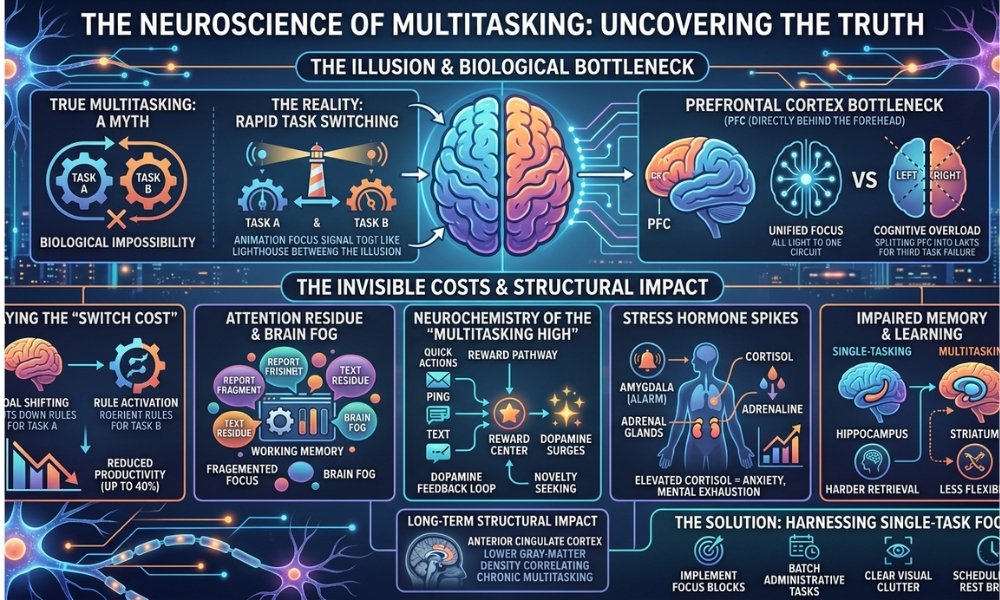
What Really Happens to Your Brain When You Multitask We live in a world that glorifies busy behavior. Answering an email during a video call, scrolling through social media while watching a movie, or texting while cooking dinner often feels like a display of peak efficiency. Modern work culture frequently lists multitasking as a desirable skill, leading many to believe that juggling multiple tasks at once helps them accomplish more in less time. However, cognitive neuroscience paints a completely different picture. While you might feel like a master juggler keeping several balls in the air, your brain is actually working against its natural architecture. Far from boosting productivity, attempting to perform multiple attention-demanding activities simultaneously degrades performance, increases mental fatigue, and alters how your brain processes information. The Great Myth: True Multitasking vs. Task Switching To understand how multitasking affects the mind, it helps to distinguish between automatic behaviors and cognitive processing. Your brain can easily handle physical, automated tasks while engaged in thought—for instance, you can walk down the street while having a conversation or fold laundry while listening to music. This is because motor-driven, highly practiced actions bypass the brain's executive control systems. When two tasks require conscious thought, decision-making, or problem-solving, true multitasking becomes a biological impossibility. The human brain does not possess parallel processors for high-level cognition. Instead of executing two complex tasks at once, the brain engages in a process called rapid task switching. It toggles its focus back and forth between competing demands in fractions of a second, creating the illusion of simultaneous action. The Prefrontal Cortex: Your Brain's Bottleneck At the heart of cognitive focus is the prefrontal cortex, the region of the brain located directly behind your forehead. The prefrontal cortex acts as the command center for executive functions, including goal setting, working memory, emotional regulation, and decision-making. When you focus on a single objective, the prefrontal cortex forms a unified neural circuit, allocating all available cognitive resources toward that goal. When you introduce a second complex objective, the prefrontal cortex is forced to divide its capacity. It splits into two independent left and right halves to manage each task separately. Add a third task, and the system experiences cognitive overload—the prefrontal cortex simply cannot create a third distinct pathway for simultaneous focus. The Invisible Cost: Paying the "Switch Cost" Penalty Every time your brain jumps from one task to another, it incurs a neurological tax known as a switch cost. While the transition feels instantaneous to you, your brain must execute two distinct steps behind the scenes: Goal Shifting: The brain actively shuts down the rules and objectives of Task A and activates the rules for Task B. Rule Activation: The brain reorients its attention, retrieving the specific context and memory required to handle Task B. These micro-delays add up significantly. Studies show that even brief interruptions or constant toggling between tabs, notifications, and documents can reduce a person's overall productivity by up to 40%. You aren't getting more done; you are spending a massive chunk of your workday simply managing the mental transitions between tasks. Attention Residue: Why Your Focus Remains Fragmented Even after you successfully switch your attention to a new task, a portion of your cognitive energy stays behind. Researchers call this phenomenon attention residue. When you shift from writing a report to reading a sudden text message, your focus does not transfer completely. A lingering percentage of your working memory remains tied to the report you just left. As you continue attempting to manage multiple incoming streams of information throughout the day, these residues stack up. By mid-afternoon, your working memory is cluttered with lingering thoughts from dozens of half-finished activities, resulting in brain fog, reduced creativity, and difficulty concentrating on even simple decisions. The Neurochemistry of the Multitasking High If task switching is so inefficient, why does it feel so satisfying? Why do we constantly seek out distractions while working? The answer lies in neurochemistry. Every time you perform a quick task—such as responding to a ping, checking an inbox, or clicking a fresh link—your brain releases a small surge of dopamine, the neurotransmitter associated with reward and pleasure. This creates a feedback loop: You switch tasks and complete a tiny action. Your brain receives a micro-reward of dopamine. You feel a brief sensation of accomplishment. Your brain seeks another hit, prompting you to seek out another distraction. This cycle tricks you into believing you are being highly productive when, in reality, you are merely satisfying a neurological urge for novel stimuli. Elevated Stress Hormones and Mental Exhaustion Constant attention-shifting takes a heavy physical toll on your nervous system. The brain demands roughly 20% of the body's total energy despite accounting for only 2% of its mass. Rapid task switching consumes glucose—the brain's primary fuel source—at a much faster rate than deep, uninterrupted focus. Additionally, the constant influx of competing stimuli triggers the body's fight-or-flight mechanism. The brain perceives rapid switching and incoming alerts as potential threats, stimulating the adrenal glands to release cortisol and adrenaline. Prolonged exposure to elevated cortisol levels leads to: Increased feelings of anxiety and irritability Physical symptoms like tension headaches and elevated heart rate Chronic mental exhaustion by the end of the day How Multitasking Impairs Memory and Learning The detrimental effects of multitasking extend beyond immediate productivity; they also hinder your ability to learn and retain information over the long term. When you absorb new information while single-tasking, the brain routes that data directly to the hippocampus, the region responsible for organizing and storing declarative memories (facts, details, and events). Information stored in the hippocampus is easy to recall and apply in new contexts. However, when you attempt to learn while distracted or multitasking, the brain shifts processing duties to the striatum, a region involved in procedural memory and habit formation. Information processed by the striatum is harder to retrieve, less flexible, and difficult to apply to general problem-solving. As a result, multitasking severely compromises your ability to retain detail and gain deep mastery over complex subjects. Long-Term Structural Impact on the Brain Can chronic multitasking permanently alter brain structure? Emerging neuroimaging research suggests that high levels of media multitasking—such as simultaneously using multiple screens and devices—may correlate with physical changes in the brain. Structural MRI scans show that individuals who engage in heavy, chronic media multitasking tend to have lower gray-matter density in the anterior cingulate cortex (ACC). The ACC plays a critical role in empathy, impulse control, and emotional regulation. While researchers are still determining whether multitasking directly causes this reduction or if individuals with smaller ACC volumes are naturally drawn to constant stimulation, the correlation highlights a strong link between fractured attention and altered neural structure. The Solution: Harnessing the Power of Single-Tasking The good news is that the human brain exhibits remarkable neuroplasticity—the ability to adapt and rewire itself based on user behavior. Just as you can train your brain to expect constant distraction, you can retrain it to cultivate deep, sustained focus through intentional single-tasking. Here are effective methods to help your brain transition back to single-task focus: 1. Implement Focus Blocks Divide your day into dedicated time blocks (e.g., 25 to 50 minutes) devoted entirely to a single objective. Turn off all unrelated notifications during these windows and treat the time as non-negotiable. 2. Batch Administrative Tasks Rather than checking email or messaging apps continuously throughout the day, designate specific times—such as once in the morning and once in the afternoon—to process communications all at once. 3. Clear Visual Clutter Visual distractions in your environment or on your desktop compete for executive resources. Keep only the tabs, documents, and tools open that are directly relevant to your active project. 4. Schedule True Rest Breaks When taking a break from work, give your brain a genuine rest. Stepping away from all screens to take a walk, stretch, or look out a window allows your default mode network to consolidate information and restore mental stamina. Final Thoughts Multitasking is one of the most persuasive illusions of modern life. It creates a false sense of high output while secretly draining your energy, raising stress levels, and degrading the quality of your work. Your brain is not broken; it is simply operating under constraints that biological evolution never anticipated. By stepping off the constant task-switching carousel and embracing single-tasking, you align your work habits with your brain's natural neurology. Protecting your attention is not just about getting more done—it is about preserving your mental clarity, deepening your capacity for learning, and protecting your cognitive health over the long haul.
Ahad··0 comments

We live in a world that glorifies busy behavior. Answering an email during a video call, scrolling through social media while watching a movie, or texting while cooking dinner often feels like a display of peak efficiency. Modern work culture frequently lists multitasking as a desirable skill, leading many to believe that juggling multiple tasks…

Continue Reading
Scroll to Top